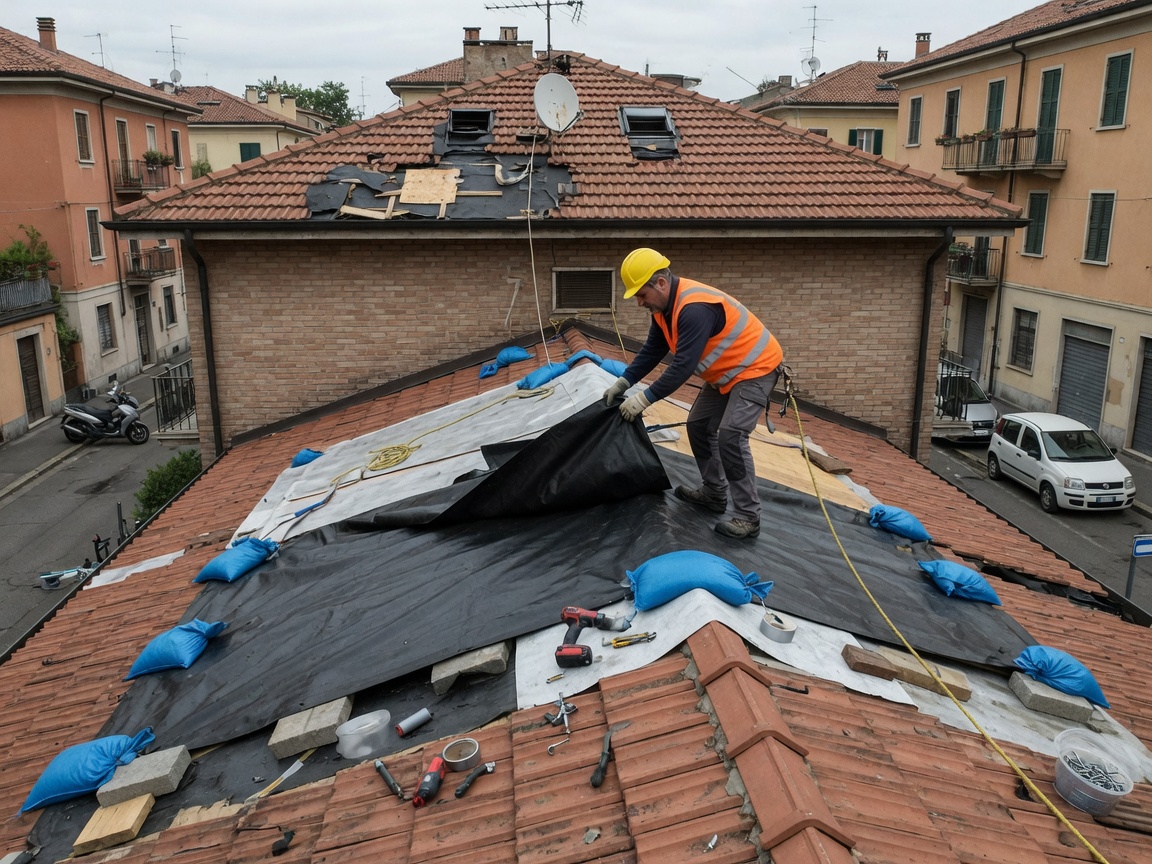
Parma homes built along State Road and Pearl Road often feature older asphalt shingles that crack under repeated freeze-thaw cycles from the humid continental climate. When a leak starts during a heavy snow event, crews must first clear snow load without pushing water under remaining shingles, then secure heavy-duty reinforced poly sheeting with furring strips and screws into rafters rather than just the decking. This method prevents wind-driven rain from lifting the tarp during the warm summer storms that follow.
In neighborhoods like Seven Hills and Ridgewood, many two-story colonials have limited attic access, so tarping crews work from ladders and roof jacks to avoid interior damage. Edge cases include tarps catching on chimney flashings near Veterans Memorial Park homes or interfering with gutter guards common on Pleasant Valley properties. Crews also watch for hidden rot around plumbing vents that can worsen if water pools under the tarp during the weeks before full replacement.
Cuyahoga County building practices require temporary coverings to withstand at least 20 psf snow load, so single-layer blue tarps fail quickly here. Technicians double-layer material on north-facing slopes where snow lingers longest and add perimeter sealing tape to block capillary wicking along seams. Homeowners are warned that tarps left longer than 90 days can trap moisture against the deck, accelerating plywood delamination in the humid summers.
Technician insight
In Parma, the thing that catches most people out with Emergency Roof Tarping is older rafter spacing on State Road homes combined with heavy lake-effect snow; a tarp screwed only into the decking pulls out within a week when meltwater adds weight, so we always hit the rafters even if it means extra time on the ladder.
Ridgewood Two-Story Leak After January Snow
Heavy snow sat on a north-facing slope of a 1960s colonial near Ridgewood, causing an active leak around a plumbing vent. We cleared the load, installed a double-layer tarp anchored into rafters, and sealed all seams. Water stopped entering the attic immediately and the homeowner scheduled full shingle replacement once weather warmed.
Emergency Roof Tarping Services We Offer
✓Storm Damage Tarping
Secures reinforced poly over wind-lifted sections after summer storms common near Cleveland Metroparks, preventing interior water intrusion until full inspection.
✓Winter Ice Dam Tarping
Covers ice dam affected eaves in Ridgewood and Pleasant Valley homes to divert meltwater away from compromised flashing until spring repairs.
✓Leak Isolation Tarping
Targets specific active leaks around vents and valleys on State Road properties, isolating water entry points without covering the entire roof.
✓Two-Story Ladder Tarping
Handles access challenges on taller homes near Parma Senior High School using roof jacks and extension ladders for safe temporary coverage.
✓Chimney Flashing Tarping
Protects areas around masonry chimneys common in older Cuyahoga County houses where flashing failure allows water to bypass main roof planes.
Emergency Roof Tarping Cost in Parma, OH
| Service | Typical Range | What Affects It |
|---|---|---|
| Small section under 100 sq ft | $200–$450 | Single-story ranch in Ridgewood; higher for two-story access |
| Medium section 100–250 sq ft | $450–$850 | Includes ice dam coverage near Pearl Road |
| Large or multi-slope coverage | $850–$1,400 | Homes near The Shoppes at Parma with complex valleys |
Ranges are typical for Parma, OH and confirmed with an exact written quote before any work starts.
How it works
- 1
Site Assessment
Inspect roof from ground and attic to locate active leaks and map snow or debris load on homes in Pleasant Valley or Seven Hills.
- 2
Material Prep
Cut reinforced poly to size and stage furring strips and screws rated for local wind and snow conditions.
- 3
Secure Installation
Fasten tarp into rafters starting at the ridge, working downward with sealed seams to handle Cuyahoga freeze-thaw cycles.
- 4
Final Check and Monitoring
Verify no water bypass points remain and schedule follow-up visits to adjust for shifting snow loads.
Pricing
Upfront quotes based on roof pitch, stories, and square footage of coverage needed.